
The patient who says, “My MRI shows a disc problem, so the disc must be the whole problem,” is often starting from a conclusion rather than a diagnosis. Imaging matters when symptoms and examination point towards structural disease, nerve compression, fracture, infection or another specific cause. It does not automatically explain the intensity or persistence of pain.
Chronic low back pain is frequently influenced by reduced movement, muscle guarding, poor sleep, fear of bending, prolonged sitting, stress and, in some cases, genuine nerve irritation. WHO recommends person-centred, multi-component care rather than reliance on a single passive treatment.
Ayurveda approaches the same patient through a different clinical language. Back pain is commonly considered in relation to Vata disturbance, especially where pain is associated with stiffness, dryness, restricted movement, radiating discomfort or symptoms that fluctuate with fatigue and exertion. That traditional framework can be useful for planning therapy, but it should not become an excuse to ignore anatomy.
A patient with progressive leg weakness, altered bladder or bowel control, numbness around the saddle area, unexplained fever, major trauma, cancer history or rapidly worsening neurological symptoms needs medical assessment, not another oil treatment. That distinction matters.
Ayurveda Treatment for Back Pain works best when the practitioner is treating a person rather than applying the same “back-pain package” to every spine.
The assessment decides whether treatment is sensible
A proper Ayurvedic consultation for chronic back pain should take longer than choosing an oil.
I would expect the clinician to ask where the pain begins, where it travels, what provokes it, whether coughing or sneezing changes it, whether mornings are worse than evenings, how long sitting is tolerated, what happens after walking, whether sleep is broken by pain, and whether weakness or altered sensation is present.
The common mistake is to arrive with an MRI report and ask for treatment of the report.
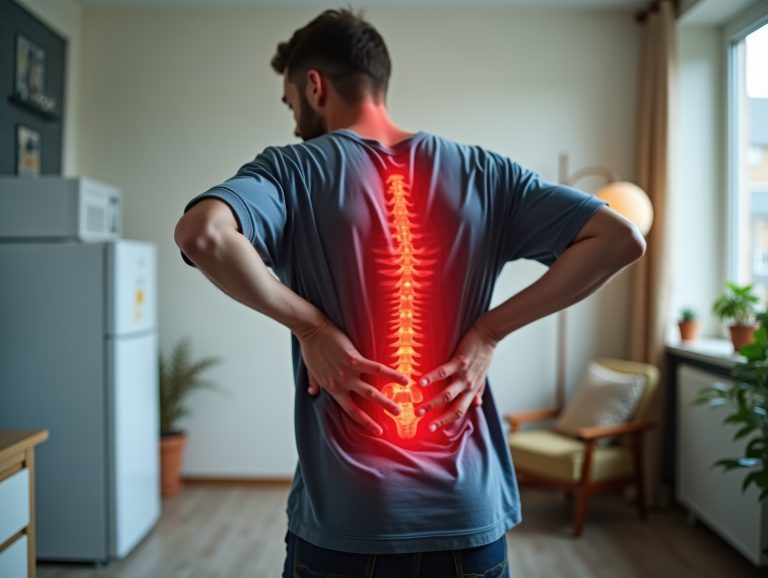
A “disc bulge” at L4-L5 is not a complete clinical description. One person may have little pain; another may have severe leg symptoms. The examination still has to decide whether the presentation behaves like mechanical pain, muscular guarding, sciatica, inflammatory pain or something requiring referral.
Current NICE guidance similarly advises clinicians to consider alternative diagnoses when symptoms are new or changing, and to use imaging selectively rather than routinely in non-specialist settings.
People searching internationally for the Best Ayurveda Treatments in Kerala or the Best Ayurvedic Centre in Kerala often focus first on the name of a therapy. The better question is whether the centre assesses neurological signs, functional limitations, general health, medication use and the suitability of treatment before beginning a programme. That is where sensible Ayurveda Treatment for Back Pain starts.
Oils, heat, massage and local therapies: useful, but not magic
Abhyanga, local oil applications, gentle massage, medicated oil pooling procedures such as Kati Basti, and forms of Swedana are commonly used in Ayurvedic back-pain programmes.
Their immediate value is practical: warmth may ease stiffness, soft-tissue work can reduce guarding, and pain relief may make walking or exercise easier.
There is a point where practitioners can oversell this. An oil does not mechanically push a prolapsed disc back into place. A heated treatment does not “melt” a bone spur. Strong massage over an acutely irritable nerve root can make symptoms worse. Deep pressure is also a poor choice in some frail patients, after recent injury, where osteoporosis is a concern, or where the diagnosis remains uncertain.
NICE permits massage and other manual therapies for low back pain only as part of a package that includes exercise, with or without psychological therapy. WHO takes a similarly multi-component view of chronic primary low back pain.
That is remarkably close to what good clinical practice should look like in an Ayurvedic setting: passive treatment to create a window for better movement, not passive treatment forever.
Greenwich Ayurveda describes back-pain care for sciatica, disc herniation and chronic back pain and also lists physiotherapy, yoga, personalised herbal consultations and Panchakarma among its services.
For persistent symptoms, Ayurveda Treatment for Back Pain should be judged outside the therapy room: easier turning in bed, longer walking tolerance, less stiffness and a gradual return to ordinary activity. Not by how much oil was used.
Panchakarma has a place, but only when it is properly selected
Panchakarma is frequently reduced online to the word “detox”. That is too loose to be clinically useful.
In traditional practice, Panchakarma refers to intensive procedures with preparatory and post-procedure phases. Arya Vaidya Sala notes that these therapies are individualised and require close medical supervision.
For chronic back pain, Basti is often given particular importance in Ayurvedic practice because of the traditional relationship between Vata and disorders involving pain, stiffness and movement. A physician may use oil-based or decoction-based Basti within a wider programme. Other procedures are selected according to the patient; there is no sound reason to assume every back-pain case requires all five classical actions.
People travelling for Panchakarma treatment in Kerala should ask a very ordinary question before committing to a 7-, 14- or 21-day programme:
What exactly is being treated, and why has each procedure been chosen for me?
This is also where medical history becomes important. Dehydration risk, frailty, pregnancy, gastrointestinal disease, kidney or liver problems, anticoagulant use, uncontrolled metabolic illness and other conditions can change what is appropriate.
Herbal medicines deserve the same caution. Some Ayurvedic products have contained potentially harmful levels of heavy metals, so unverified preparations should be avoided.
“Natural” is not a substitute for quality control.
Panchakarma may form part of Ayurveda Treatment for Back Pain, but the treatment plan should become more conservative, not more aggressive, when the patient is medically complex.
What keeps the improvement after treatment ends
Back pain may improve during residential treatment because the patient is sleeping regularly, walking, receiving hands-on therapy and spending fewer hours at a desk.
The difficult part begins after returning home.
The patient who resumes ten-hour sitting days, stops exercises after a week and waits for the next massage is likely to relapse. So is the person who becomes terrified of bending because an MRI mentioned degeneration. Avoidance creates its own problem: less movement, less confidence and poorer physical capacity.
Exercise is not an optional extra in persistent low back pain. NICE advises exercise programmes and encourages continuation of normal activity; WHO includes exercise within recommended care for chronic primary low back pain.
The programme does not need to look athletic.
For one patient it may begin with short walks and controlled trunk work; for another, gradual lifting and better tolerance for standing at work.
Yoga can help some patients, particularly where it is adapted rather than forced. A systematic review has reported benefit for chronic low back pain, though the quality and style of programmes vary.
Aggressive forward folding, long unsupported holds or copying advanced poses from social media is not rehabilitation.
Stress deserves discussion without turning pain into a psychological problem. Poor sleep and persistent worry can amplify pain sensitivity and guarding. Treating only the lumbar muscles while ignoring four-hour sleep and constant tension often disappoints.
Posture is another area where advice becomes unnecessarily rigid. There is no useful prize for holding a “perfect” sitting posture for eight hours. Changing position regularly, moving frequently and having enough strength and endurance for the demands of the day usually matters more.
The most credible Ayurveda Treatment for Back Pain is usually the least theatrical: reduce irritability, restore movement, rebuild capacity, improve routine, and reassess when progress does not follow the expected pattern.
FAQs
1. What is the best Ayurveda treatment for back pain?
There is no single best therapy for every patient. Ayurveda can be useful when treatment follows a proper examination. Depending on the presentation, treatment may include medicated oil therapy, Swedana, Kati Basti, Basti, selected herbal medicines, movement therapy and lifestyle changes. A disc-related nerve problem is managed differently from uncomplicated muscular stiffness.
2. Which Ayurvedic therapies are most effective for back pain?
Therapies such as Abhyanga, local oil treatments, Kati Basti, forms of Swedana and physician-selected Basti are commonly used. Their usefulness depends on the diagnosis, stage of pain and the patient’s general health. Stronger treatment is not automatically better.
3. How does Panchakarma help in treating chronic back pain?
It may help selected patients as part of an individualised programme, particularly when Basti and preparatory oil and heat therapies are considered appropriate in the Ayurvedic assessment. Evidence specific to comprehensive Ayurvedic protocols for chronic low back pain remains limited. A 2025 case report showed improvement but also called for robust controlled studies.
4. Does Ayurveda permanently cure chronic back pain?
A permanent cure cannot responsibly be promised. Some patients achieve prolonged symptom control or become pain-free, while others experience recurrence. The result depends on the underlying condition, physical capacity, work demands, sleep, activity and whether structural or neurological disease remains present.
5. Why is Ayurveda considered effective for chronic back pain?
It can help some people because treatment may combine symptom-relieving therapies with movement, routine, sleep, diet and stress management rather than depending on one intervention. That broader approach is compatible with modern recommendations for person-centred, multi-component chronic back-pain care.
6. Can Ayurveda help manage sciatica-related back pain?
Yes, it may help reduce pain, stiffness and muscular guarding in selected cases. Sciatica accompanied by progressive weakness, severe neurological loss, bladder or bowel disturbance or rapidly worsening symptoms requires urgent conventional medical assessment.
7. Can Ayurveda help reduce inflammation associated with back pain?
Yes, symptom improvement may occur with appropriately selected therapies and medicines, but “inflammation” should not be assumed simply because pain is present. Suspected inflammatory spinal disease needs proper medical investigation.
8. Can stress and poor posture contribute to back pain according to Ayurveda?
Yes. Both can influence symptom persistence, although posture is rarely the sole explanation. Long periods in one position, poor recovery, low activity and stress-related muscle guarding are generally more useful targets than trying to maintain a supposedly perfect posture throughout the day.
9. Is Ayurvedic treatment effective for disc-related back pain?
Yes, it can be useful for symptom management and rehabilitation in selected disc-related cases, particularly where there is no surgical emergency. It should not be claimed to reverse every disc protrusion or remove significant nerve compression. Neurological findings must guide referral.
10. Can Ayurveda improve flexibility and spinal mobility?
Yes. Improvement is possible when pain-relieving therapies are followed by graded mobility work, appropriate yoga or physiotherapy. The gains tend to be more useful when patients continue moving after the supervised treatment period rather than depending indefinitely on passive therapies.